

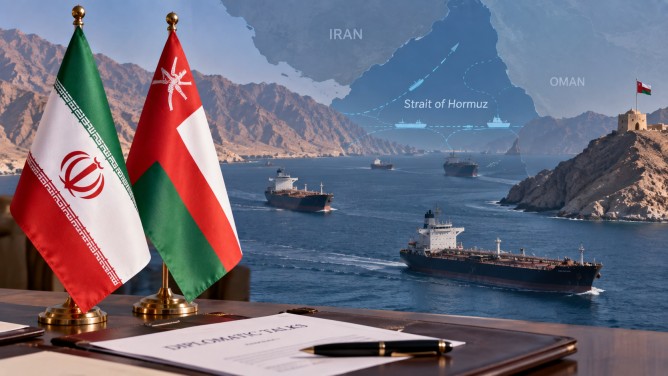
A planned gathering involving Iran, Oman, and other Gulf nations aimed at discussing new shipping protocols through the Strait of Hormuz has been delayed indefinitely, with no rescheduled date provided. The meeting, which was to occur in Muscat, intended to address regional security concerns and review an Iran-Oman initiative for managing commercial shipping in this critical maritime corridor. Oman’s Foreign Minister, Badr Albusaidi, stated that the delay was necessary to ensure a consensus is reached. Iran confirmed the postponement, highlighting that the decision was made collectively with Oman following appeals from several neighboring countries.
The delay in talks came on the heels of an incident involving an Iranian commercial vessel reportedly being hit near Qeshm Island. Iranian state media reported one fatality and injuries to four crew members. Maritime officials noted that the vessel was struck by a projectile while navigating the Strait of Hormuz, leading to a fire and necessitating the evacuation of the crew. The proposed shipping arrangement discussed by Iran and Oman suggested that vessels entering the Persian Gulf would navigate through Iranian waters, while those exiting would travel through both Iranian and Omani territories.
However, Iran has made it clear that any reopening of the Strait of Hormuz will be contingent upon meeting specific conditions. Tehran has also suggested the possibility of imposing fees on vessels using these proposed routes. Currently, commercial activity through the Strait remains substantially reduced. As one of the globe’s vital oil shipment routes, ongoing disruptions here pose significant concerns for international energy markets.
This postponement occurs against a backdrop of broader diplomatic tensions within the Gulf region. Reports indicate that Saudi Arabia has been advocating for adjustments to the proposed Iran-Oman plan, while Bahrain has declared its intent not to participate in the meeting. The prevailing uncertainty surrounding Hormuz has also been a factor in rising oil prices. Saudi Arabia has maintained the closure of its 1,200-kilometer East-West oil pipeline following recent drone attacks, thereby restricting an alternative crude transport route to the Red Sea.
With the pipeline remaining shut, a substantial portion of global oil supplies could be jeopardized, compounding the shipping disruptions in the Strait of Hormuz. As a result, Brent crude prices have surged past $100 a barrel amid these escalating regional tensions.