

Germany has reiterated its commitment to supporting Ukrainian President Volodymyr Zelenskiy amidst calls from former U.S. President Donald Trump for a change in Ukraine’s leadership, highlighting a growing divergence between Berlin and Washington over the approach to the conflict with Russia.
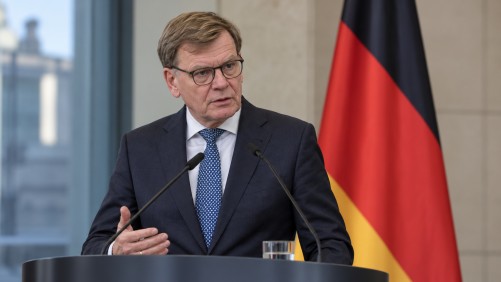
German Foreign Minister Johann Wadephul emphasized Berlin’s steadfast backing of Zelenskiy and his administration as Ukraine continues to grapple with the ongoing conflict with Russia. Wadephul also called for increased diplomatic pressure on Russian President Vladimir Putin to bring Moscow back to the negotiating table, underscoring the importance of consistent support for Ukraine and heightened economic sanctions against Russia as key strategies in seeking a peaceful resolution.
This stance comes in contrast to Trump’s recent remarks criticizing Ukraine’s military actions against Russian oil infrastructure and his announcement of a deal related to Russian diesel supplies. Additionally, the temporary lifting of certain U.S. sanctions on Russian fuel by Trump’s administration has raised concerns among European allies about the coherence of international strategies toward Russia.
Germany, as one of Ukraine’s most significant supporters in Europe, has made it clear that it will maintain its sanctions against Russia, reinforcing its belief in economic pressure as a vital tool to urge Moscow toward negotiations. This position mirrors that of the United Kingdom, where British Prime Minister Andy Burnham has also expressed continued support for Ukraine, confirming ongoing efforts to strengthen sanctions against Russia during a conversation with Zelenskiy.
The declarations from Germany and the UK affirm the sustained European support for Ukraine in stark contrast to the policy differences emerging with Washington. As the war in Ukraine persists, these disagreements concerning leadership, sanctions, and strategies are becoming more pronounced, reflecting the complex geopolitical dynamics at play.