

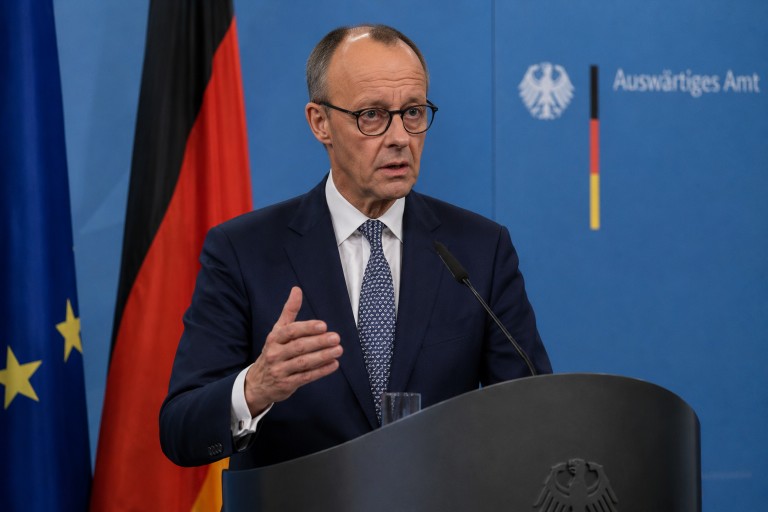
In light of the United States’ recent announcement of a grants program aimed at supporting initiatives focused on national sovereignty, migration, censorship, and the rule of law across Europe, German Chancellor Friedrich Merz has issued a caution to the US regarding involvement in Germany’s forthcoming state elections. This program, which offers financial support of up to $3 million to eligible organizations, think tanks, and individuals, has sparked debate over its potential implications on political dynamics within Europe.
Chancellor Merz emphasized that Germany refrains from interfering in US elections and expects reciprocal respect. He highlighted that German law prohibits foreign funding for political parties, underscoring the importance of maintaining sovereignty in the electoral process. The grants program has stirred concern among critics who fear it might inadvertently bolster right-wing political movements in Europe, despite assurances from the US that the initiative is designed to uphold democracy, human rights, and sovereignty.
The US State Department clarified that the intent of the funding is to reinforce democratic values and that political parties are expressly excluded from receiving these grants. Nonetheless, the initiative has amplified existing tensions between the US and several European governments regarding political influence and the integrity of democratic processes.
This development comes amid a backdrop of broader geopolitical friction, with various European nations expressing unease over perceived external attempts to sway political landscapes. As Germany approaches its state elections, the discourse surrounding foreign influence and electoral integrity remains a sensitive and critical issue.