

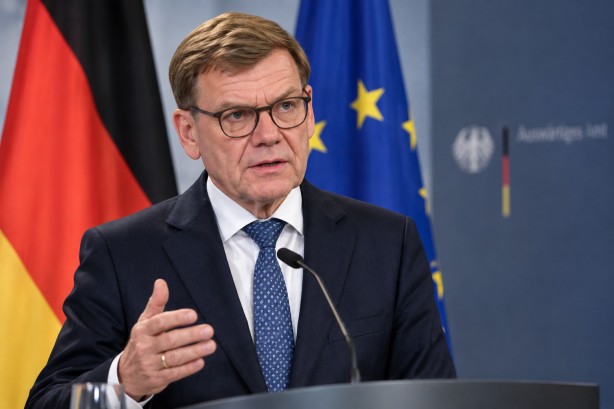
Tensions and collaborations within the European Union are in the spotlight as Germany and Hungary explore avenues to enhance their bilateral relationship. Against the backdrop of Hungary’s ongoing rule-of-law reforms and its quest for EU funds, German Foreign Minister Johann Wadephul recently visited Budapest to strengthen ties with his Hungarian counterpart.
Central to the discussions were efforts to diversify energy supplies—a critical issue for both nations as Europe seeks to reduce reliance on Russian energy. Wadephul emphasized the importance of this shift, reflecting broader European security concerns and Germany’s strategic stance towards Russia. This dialogue aligns with the EU’s push for energy independence amidst geopolitical uncertainties.
The visit also highlighted economic cooperation as a pivotal area for growth. Wadephul engaged with Hungary’s Minister of Economy and Energy alongside representatives from major German firms like Mercedes-Benz, Siemens, and Audi Hungaria. Their talks focused on economic recovery, competitiveness, and infrastructure, underscoring the role of German companies in Hungary’s economic landscape.
As Berlin and Budapest aim to reset their bilateral relations, they are navigating complex economic and political landscapes. The discussions covered a spectrum of sectors, including the automotive industry, defense, and Hungary’s energy strategy, signaling a commitment to deeper collaboration and enhanced economic ties.
This diplomatic engagement comes at a time when both countries are seeking to align more closely on European policy, balancing national interests with broader EU goals. With a focus on mutual benefits and shared objectives, the visit marks a step towards a more integrated and cooperative future for Germany and Hungary within the European Union framework.