

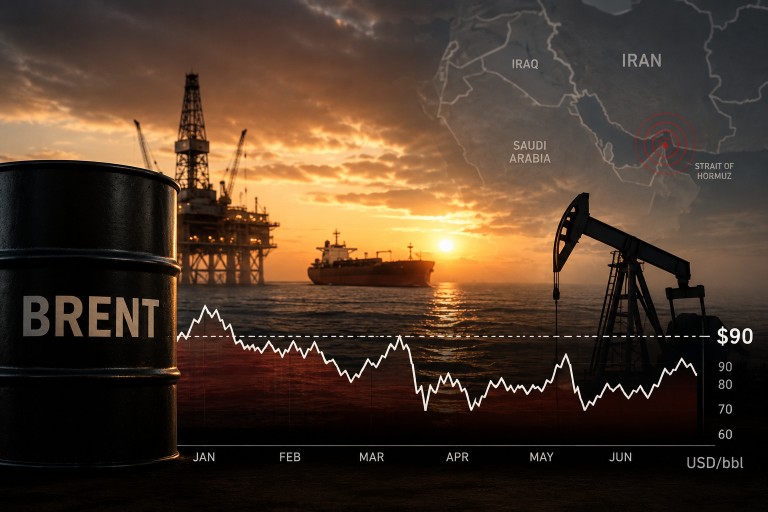
In the wake of military tensions between the United States and Iran impacting Middle Eastern oil routes, Brent crude prices have seen significant fluctuations. The conflict has notably disrupted tanker traffic through the Strait of Hormuz, a crucial channel that facilitates about 20% of the world’s oil transport. Despite these disruptions, Brent crude has struggled to surpass $90 per barrel, closing the week at around $85. This marks its most substantial weekly gain since April, with an 11% increase, while the US benchmark, West Texas Intermediate, neared $80.
Despite the escalation, Brent’s price peaked at $87.55 per barrel this week and hasn’t moved beyond that mark, even as the regional conflict widened and slowed tanker movements through Hormuz. The market’s hesitation to push prices further suggests that investors remain optimistic about potential diplomatic solutions, which could alleviate some of the immediate supply concerns. Analysts are closely monitoring global oil inventories and any signs that the disruption in Hormuz could be prolonged, which would further tighten supplies.
The stability of oil markets amidst escalating military exchanges is notable, as Brent crude has traded within a narrow range recently. This trading pattern indicates that investors are betting on de-escalation rather than further conflict. However, the Strait of Hormuz remains a critical point of concern for energy markets globally. With tanker traffic declining, exporters are exploring alternative routes to reduce their reliance on this strategic passageway.
The ripple effects of these supply challenges extend beyond crude oil. Refining margins in the United States have increased due to tighter supplies of diesel and gasoline, while European fuel markets are also beginning to feel the strain. The situation is compounded by reduced fuel exports from Russia, exerting additional pressure on the global energy landscape.
Market participants now have their eyes on two pivotal factors: a potential sharp decline in oil inventories indicating a supply shortage, and the outcome of diplomatic efforts. If negotiations falter and the Gulf disruption continues, Brent crude might finally breach the $90 threshold. Until these developments unfold, analysts expect Brent to remain below this price point, despite the heightened geopolitical risks.