

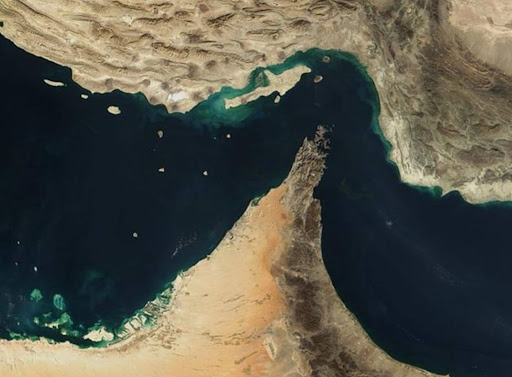
US Energy Secretary Chris Wright has confirmed he is in dialogue with multiple unnamed nations about the Strait of Hormuz crisis — but the results so far have been limited, as global allies continue to avoid committing warships to the contested waterway despite President Trump’s urgent appeals. Trump posted on Truth Social calling on the UK, China, France, Japan, South Korea, and all oil-importing nations to deploy naval forces to the blocked shipping lane, claiming many were already preparing to do so. Wright’s diplomatic outreach and Trump’s social media pressure have so far failed to produce any firm military commitments.
Iran’s blockade of the strait began in late February as retaliation for joint US-Israeli airstrikes. The closure has generated the largest oil supply disruption in history, cutting off approximately one-fifth of global oil exports and sending prices soaring internationally. Tehran has declared tankers bound for the US, Israel, or their allies to be legitimate military targets. Sixteen vessels have been attacked, and the threat of mines being laid across the passage has made the prospect of naval escort operations dangerous and politically sensitive for any potential contributor.
Wright told a major American broadcaster that he expected China to prove a constructive partner in reopening the strait, through which roughly one-fifth of global oil exports normally pass. China is both a major Iranian ally and a top consumer of Gulf crude — giving it a dual interest in finding a solution that avoids military confrontation. France has been the most emphatic in declining to participate militarily, with its defence minister ruling out any warship deployment while fighting continues. The UK, Japan, and South Korea have all indicated they are studying options, but none has moved toward concrete military action.
The EU’s Aspides mission has emerged as a possible vehicle for expanding maritime protection to the Hormuz area. The mission currently consists of ships from France, Italy, and Greece operating against Houthi threats in the Red Sea. EU foreign affairs ministers are reportedly considering whether to widen the mission’s scope to include the Persian Gulf — but Germany’s foreign minister has publicly stated his scepticism about the mission’s effectiveness, adding that he doubted expansion would produce meaningfully better security outcomes.
The broader pattern suggests that while diplomatic activity is intensifying, military action remains politically and practically off the table for most nations. China’s reported conversations with Iran about facilitating tanker passage represent perhaps the most promising diplomatic avenue. The Chinese embassy in Washington confirmed Beijing’s intention to strengthen communication with relevant parties and play a constructive role in achieving de-escalation and peace. Whether these efforts will be sufficient to reopen one of the world’s most vital trade corridors remains deeply uncertain.